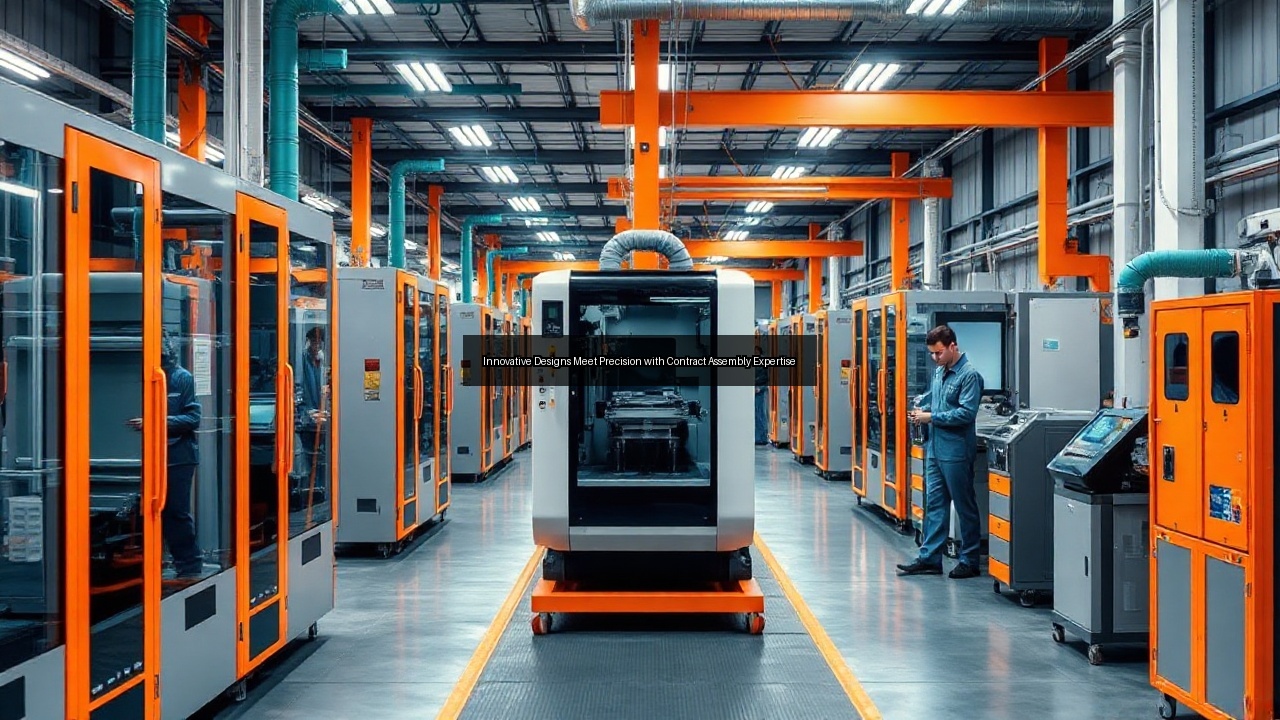
Innovative Designs Meet Precision with Contract Assembly Expertise
Understanding Contract Assembly Services
The Role of Contract Manufacturers in Modern Industry
Contract assembly services play a crucial role in the manufacturing landscape. Companies often seek contract manufacturers to leverage their specialized expertise, enabling them to focus on core competencies. These manufacturers provide comprehensive assembly solutions, from the initial design phase to final production. By outsourcing assembly tasks, businesses can tap into advanced technologies and skilled labor without the burden of maintaining costly in-house operations. This partnership allows manufacturers to innovate rapidly while ensuring that production meets high-quality standards. In essence, contract manufacturers streamline processes, reduce overhead costs, and enhance overall productivity.
Benefits of Outsourcing Contract Assembly
Outsourcing contract assembly services delivers numerous advantages for manufacturers. First, it significantly reduces costs associated with labor, equipment, and facility maintenance. By partnering with a contract assembly provider, businesses gain access to a pool of experts who specialize in efficient assembly processes. This collaboration often leads to faster turnaround times and improved scalability, particularly for companies facing fluctuating demand. Furthermore, outsourcing assembly allows manufacturers to focus on product development and strategic initiatives rather than getting bogged down by day-to-day production challenges. Overall, the benefits of outsourcing empower companies to remain competitive in a rapidly changing market.
Key Considerations for Choosing a Contract Assembly Provider
Selecting the right contract assembly provider requires careful consideration of several factors. First, evaluate the provider's experience and expertise in your specific industry. A company with a proven track record in your sector will better understand your unique challenges and requirements. Additionally, assess their quality control measures, ensuring they adhere to recognized standards like ISO 9001 certification. The capability to handle logistics and supply chain management also plays a vital role in maintaining efficiency. Finally, consider the provider's flexibility in accommodating design changes and scaling production as needed. Making an informed choice can lead to a successful partnership that enhances your manufacturing capabilities.
Innovative Designs and Engineering Expertise
Integrating Lean Manufacturing Principles
Integrating lean manufacturing principles into contract assembly services maximizes efficiency and minimizes waste. This methodology emphasizes the importance of streamlining processes, reducing unnecessary steps, and enhancing overall productivity. By applying these principles, contract manufacturers can optimize assembly workflows, leading to significant cost savings. Lean manufacturing also fosters a culture of continuous improvement, where companies regularly assess their processes and implement changes that drive value. This approach not only benefits the manufacturer but also ensures that clients receive high-quality products in a timely manner. Ultimately, embracing lean practices in contract assembly services results in better resource allocation and improved customer satisfaction.
Prototyping and Fabrication Techniques
Prototyping and fabrication techniques form the backbone of innovative design in contract assembly services. Skilled engineers utilize advanced technologies to develop prototypes that accurately reflect the final product. These prototypes undergo rigorous testing to identify potential issues early in the production process. Effective fabrication techniques ensure that materials are used efficiently, enhancing the overall quality of the assembly. By prioritizing prototyping, contract manufacturers can refine designs and reduce production errors, leading to cost-effective solutions for their clients. This iterative approach to design and fabrication not only meets client specifications but also accelerates time-to-market for new products.
Importance of Quality Control in Assembly Services
Quality control is paramount in contract assembly services, ensuring that every product meets stringent standards. A robust quality control system involves multiple checkpoints throughout the assembly process, from initial inspection of raw materials to final product testing. Contract manufacturers often implement ISO 9001 certification protocols to guarantee consistency and reliability. This focus on quality not only minimizes defects but also builds trust with clients. By investing in comprehensive quality control measures, contract assembly providers enhance their reputation and reduce costs associated with returns and rework. Ultimately, a commitment to quality ensures that manufacturers deliver exceptional products that meet customer expectations.
Enhancing Efficiency and Scalability
Logistics and Supply Chain Management in Contract Assembly
Logistics and supply chain management play a vital role in the effectiveness of contract assembly services. Efficient logistics streamline the flow of materials and components, ensuring timely delivery to assembly lines. Contract manufacturers often have established relationships with suppliers, enabling them to source high-quality materials at competitive prices. This network not only enhances operational efficiency but also allows for greater scalability. As demand fluctuates, contract manufacturers can adjust production schedules and inventory levels accordingly. By optimizing logistics and supply chain processes, contract assembly providers can significantly reduce lead times and improve overall responsiveness to market changes.
Cost-Effective Strategies for Manufacturers
Manufacturers continually seek cost-effective strategies to enhance their contract assembly services. Outsourcing assembly allows companies to avoid the significant costs associated with maintaining in-house capabilities. Moreover, contract manufacturers often utilize economies of scale, driving down production costs while maintaining high quality. Implementing automation in assembly processes can further reduce labor costs and minimize errors. Additionally, manufacturers can services from contract assembly manufacturer leverage data analytics to identify inefficiencies and optimize workflows. By adopting these strategies, companies can improve their bottom line while maintaining the flexibility needed to adapt to market demands.
ISO 9001 Certification and Its Impact on Quality
ISO 9001 certification serves as a benchmark for quality assurance in contract assembly services. This widely recognized standard outlines criteria for an effective quality management system, focusing on customer satisfaction and continuous improvement. Companies that obtain ISO 9001 certification demonstrate a commitment to maintaining high-quality standards throughout their manufacturing processes. This certification not only enhances the credibility of contract manufacturers but also assures clients of the quality of their products. Businesses that partner with ISO-certified contract assembly providers can rely on consistent quality, ultimately leading to improved customer loyalty and market competitiveness.
Maximizing Quality through Expert Collaboration
Onboarding Process for New Clients
The onboarding process for new clients in contract assembly services sets the foundation for a successful partnership. This process typically begins with an in-depth consultation to understand the client’s specific needs, goals, and expectations. During this phase, contract manufacturers assess the required assembly services, production timelines, and quality standards. Establishing clear communication channels is essential to ensure that all parties are aligned throughout the project. A well-structured onboarding process not only fosters collaboration but also enables manufacturers to tailor their services to meet client specifications effectively. By prioritizing client engagement during onboarding, contract assembly providers can enhance satisfaction and build long-term relationships.
The Role of Powder Coating in Contract Assembly
Powder coating plays a significant role in enhancing the durability and appearance of products in contract assembly services. This finishing technique involves applying a dry powder to the surface of an item, which is then cured under heat to form a tough, protective layer. Powder coating offers several advantages, including resistance to chipping, scratching, and fading, making it ideal for various applications. Contract manufacturers often incorporate powder coating into their assembly processes to provide clients with high-quality finishes that withstand the test of time. By utilizing this technique, manufacturers not only enhance product aesthetics but also increase the overall value of their offerings.
Packaging Solutions for Enhanced Product Delivery
Effective packaging solutions are crucial for ensuring that products reach customers in optimal condition. Contract assembly services often include packaging as an integral part of the assembly process. Manufacturers must consider factors such as material choice, design, and functionality contract assembly company when developing packaging solutions. Proper packaging protects products during transit and enhances the unboxing experience for consumers. Additionally, innovative packaging can serve as a marketing tool, communicating brand values and product features. By prioritizing packaging in the assembly process, contract manufacturers can elevate the overall product experience and contribute to customer satisfaction.
See Also
- How Contract Assembly Services Can Transform Your Production Process
- The Benefits of Partnering with a Specialized Contract Assembly Company
- Unlocking Efficiency with Contract Assembly Services to Boost Your Manufacturing Process
- Prototyping to Production How Contract Assembly Services Bridge the Gap