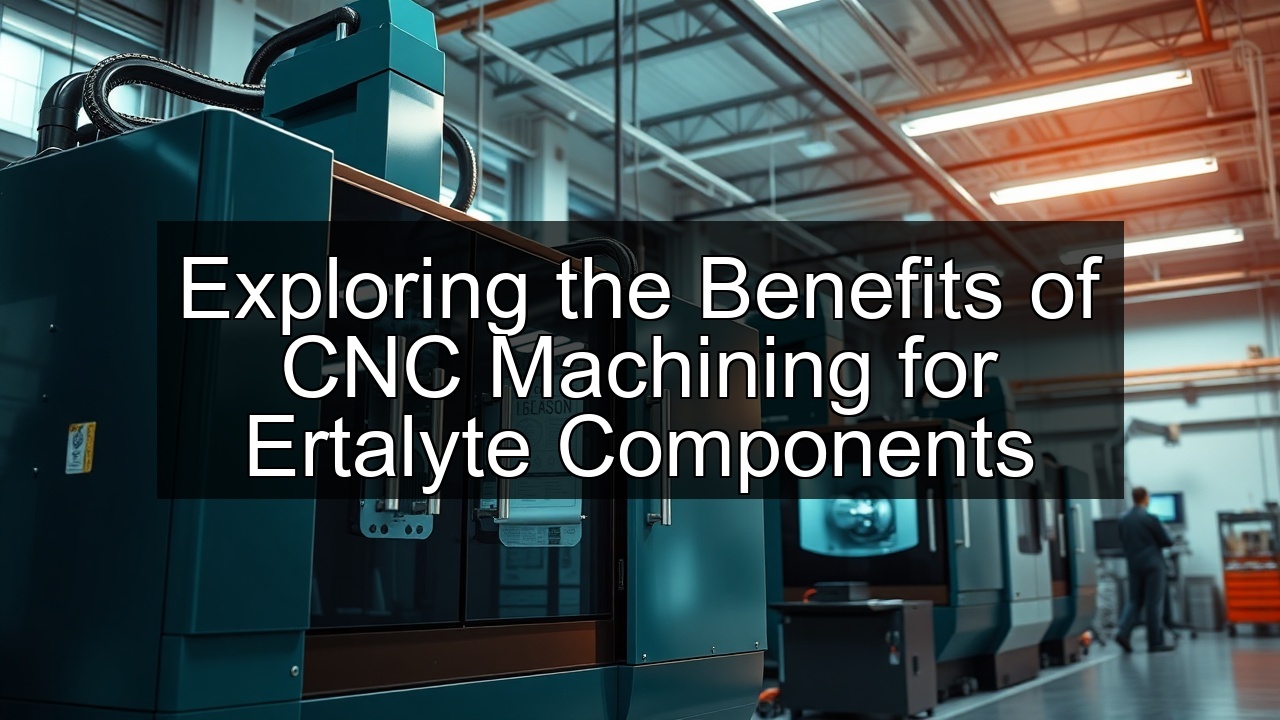
Exploring the Benefits of CNC Machining for Ertalyte Components
Understanding Ertalyte and Its Applications
What is Ertalyte and Its Composition?
Ertalyte is a high-performance thermoplastic that belongs to the polyester family, specifically polyethylene terephthalate (PET). Known for its excellent mechanical properties, Ertalyte is a solid choice for various applications that require durability and resistance to wear. Its composition includes a crystalline structure that enhances its tensile strength, making it suitable for demanding environments. This polymer exhibits low friction characteristics and serves as an effective solid lubricant, which is particularly beneficial in machinery and moving parts. Machinists appreciate Ertalyte for its consistent performance and ease of machining. Its chemical resilience also adds to its versatility, allowing it to withstand exposure to various solvents and chemicals without degrading. This makes Ertalyte a popular choice among engineers and manufacturers seeking reliable and robust materials for their projects.
Applications of Ertalyte in Various Industries
Ertalyte finds applications across multiple industries due to its unique properties. In the automotive sector, manufacturers use Ertalyte for components that require high tensile strength and durability, such as gears, bearings, and bushings. Its low friction coefficient contributes to the efficiency of moving parts, reducing wear and extending service life. In the aerospace industry, Ertalyte serves as an excellent material for components that need to withstand extreme conditions while maintaining structural integrity. Its lightweight nature makes it an ideal alternative to heavier metals, thereby enhancing fuel efficiency. Additionally, Ertalyte's insulating properties make it suitable for electrical applications, including housings and insulators. Beyond these sectors, Ertalyte is also utilized in the food and beverage industry, where its resistance to moisture and chemicals ensures product safety and compliance with health standards. This broad range of applications highlights why Ertalyte has become a staple in modern manufacturing practices.
Comparing Ertalyte with Other High-Performance Plastics
Ertalyte stands out among high-performance plastics, especially when compared to other materials like PEEK, PTFE, and nylon. While PEEK offers superior thermal stability and chemical resistance, it is often more expensive and challenging to machine. Ertalyte, on the other hand, provides an excellent balance of performance and cost-effectiveness, making it a preferred choice for many applications. Compared to PTFE, which excels in non-stick properties, Ertalyte offers better mechanical strength and is easier to fabricate, making it more versatile in industrial settings. Nylon, widely used for its durability, falls short in moisture resistance compared to Ertalyte, which maintains its properties even in humid environments. This comparison emphasizes why engineers and manufacturers often choose Ertalyte for applications requiring a combination of strength, durability, and machinability, solidifying its position as a leading material in the realm of thermoplastics.
The Advantages of CNC Machining for Ertalyte Components
Precision and Accuracy in Machining Ertalyte
CNC machining offers unparalleled precision and accuracy when working with Ertalyte components. The technology allows for intricate designs and tight tolerances that manual machining cannot achieve. This precision is crucial for applications where even the slightest deviation can lead to failure. CNC machines employ computer-controlled tools that follow exact specifications, ensuring every part produced adheres to the required standards. This capability is particularly beneficial in industries like aerospace and automotive, where component reliability is non-negotiable. Moreover, CNC machining minimizes human error, further enhancing the overall quality of the finished products. The ability to replicate designs with high fidelity means manufacturers can produce large volumes of Ertalyte parts consistently, streamlining production and reducing waste. Consequently, CNC machining has become the go-to method for fabricating Ertalyte components, ensuring they meet the stringent demands of modern engineering.
Efficiency in Production and Custom Machining
The efficiency of CNC machining significantly enhances production timelines for Ertalyte components. Automated processes reduce the time it takes to move from design to finished product, a critical factor in today’s fast-paced manufacturing environment. CNC machines can run continuously, producing parts with minimal downtime, which optimizes workflow and maximizes output. Custom machining capabilities allow manufacturers to tailor each component to specific requirements, accommodating unique designs and specifications that traditional methods struggle to achieve. This flexibility not only enhances product diversity but also enables rapid prototyping, allowing businesses to test and refine designs quickly. The efficiency gained through CNC machining translates to shorter lead times, making it easier for companies to respond to market demands and customer needs. By investing in CNC machining solutions, manufacturers can significantly improve their operational efficiency while delivering high-quality Ertalyte components.
Cost-Effectiveness of CNC Processes for Ertalyte Parts
CNC machining proves to be a cost-effective solution for producing Ertalyte parts, particularly when considering the long-term benefits. Initial investments in CNC machinery may seem substantial, but the automation and precision they provide can lead to significant savings over time. Reduced material waste and higher production rates contribute to lower overall costs per part. Additionally, the reliability of CNC machining minimizes the risk of defects, which can be costly to rectify. This reliability directly impacts the bottom line by reducing the need for rework and ensuring timely deliveries. Furthermore, the ability to produce complex geometries without the need for extensive tooling or manual labor further enhances cost savings. Manufacturers can allocate resources more effectively, focusing on innovation and quality rather than overcoming production challenges. The combination of efficiency, precision, and reduced waste positions CNC machining as an excellent choice for anyone looking to fabricate Ertalyte components economically.
CNC Machining Techniques for Ertalyte
Common CNC Machining Processes for Ertalyte
Several CNC machining processes effectively cater to the unique properties of Ertalyte, ensuring high-quality outputs. Milling, turning, and laser cutting are among the most commonly employed techniques. Milling allows for the creation of complex shapes and features, making it ideal for fabricating parts with intricate designs. CNC milling machines use rotating cutting tools to remove material, achieving precise dimensions and surface finishes. Turning, on the other hand, is particularly suitable for cylindrical components. It involves rotating the Ertalyte workpiece against a stationary cutting tool, producing parts with excellent roundness and smooth finishes. Laser cutting offers another advantage, allowing for clean and precise cuts with minimal thermal distortion. Each of these techniques plays a vital role in the fabrication of Ertalyte components, providing choices that best suit specific project requirements and design specifications.
The Role of Automation in Ertalyte Machining
Automation plays a critical role in enhancing the efficiency and quality of Ertalyte machining. Automated CNC systems streamline operations by reducing manual intervention, thereby increasing production speed and consistency. These systems can be programmed to execute complex machining sequences with precision, ensuring uniformity across all manufactured parts. Automation also facilitates the integration of additional technologies, such as robotic arms for material handling or quality inspection systems that monitor the machining process in real time. This level of automation not only improves productivity but also enhances workplace safety by minimizing human exposure to potentially hazardous machinery. As a result, manufacturers can achieve higher output rates while maintaining quality standards, making automation an essential component in modern Ertalyte machining operations.
Selecting the Right Tools for Machining Ertalyte
Choosing the appropriate tools for machining Ertalyte significantly impacts the quality and efficiency of the process. Tool selection should consider factors such as the specific machining technique, the desired finish, and the type of CNC machine used. High-speed steel (HSS) tools and carbide tools are commonly used for machining Ertalyte due to their durability and ability to maintain sharp cutting edges. Additionally, using tools specifically designed for machining plastics can further enhance results. These tools often feature geometries optimized for chip removal and reduced friction, which are critical when working with Ertalyte's properties. Proper tool selection reduces wear and tear on the equipment, extends tool life, and ensures that the finished components meet the required tolerances and surface finishes. By investing in the right tooling, manufacturers can optimize their CNC machining processes and achieve better outcomes in Ertalyte fabrication.
Challenges and Solutions in Machining Ertalyte
Handling the Unique Properties of Ertalyte
Machining Ertalyte presents unique challenges due to its specific properties, such as its tendency to expand and contract with temperature changes. This thermal sensitivity can lead to dimensional inaccuracies if not managed correctly. Machinists must account for these characteristics during the design and machining processes. Utilizing CNC machines with temperature control capabilities can mitigate these challenges by maintaining a stable environment for machining. Additionally, choosing appropriate cutting speeds and feeds can help manage heat generation during machining, reducing the risk of thermal expansion. It is essential to create a machining strategy that accommodates Ertalyte’s unique properties while optimizing the overall manufacturing process. By understanding these challenges, manufacturers can develop effective solutions that ensure high-quality outputs.
Addressing Accelerated Aging in Ertalyte Components
Accelerated aging is a significant consideration when machining Ertalyte components, particularly for applications exposed to harsh environmental conditions. Over time, Ertalyte may experience changes in mechanical properties, leading to reduced performance. To combat this, manufacturers should consider using additives or coatings that enhance the material's resistance to aging. Regular testing and quality assessments can also ensure that components remain within acceptable limits over time. By implementing preventive measures and monitoring the performance of Ertalyte parts, manufacturers can extend the service life of their components and maintain the integrity of their products. Understanding the aging process allows businesses to make informed decisions regarding material selection and design, ultimately leading to more reliable outcomes.
Overcoming Issues with Machining Tolerances and Finishing
Achieving tight tolerances and optimal finishes while machining Ertalyte can be challenging due to its mechanical properties. The material’s tendency to deform under pressure can complicate the machining process, making it vital to select the right parameters. Adjusting cutting speeds and using appropriate cooling methods can help control material behavior during machining. Additionally, employing advanced finishing techniques, such as polishing or surface treatment, can enhance the final appearance and performance of Ertalyte components. Regular calibration and maintenance of CNC machines also play a crucial ertalyte cnc machining role in ensuring precision. By addressing these challenges proactively, manufacturers can produce high-quality Ertalyte parts that meet stringent industry standards.